Many people walk into the gym and go straight to their first heavy set. Others leave the moment their last set is done. Skipping the warm-up and cool-down may save ten minutes, but it can cost you performance, comfort and sometimes an injury.
This guide explains what warm-ups and cool-downs do, how long they should be and gives you simple routines you can use today.
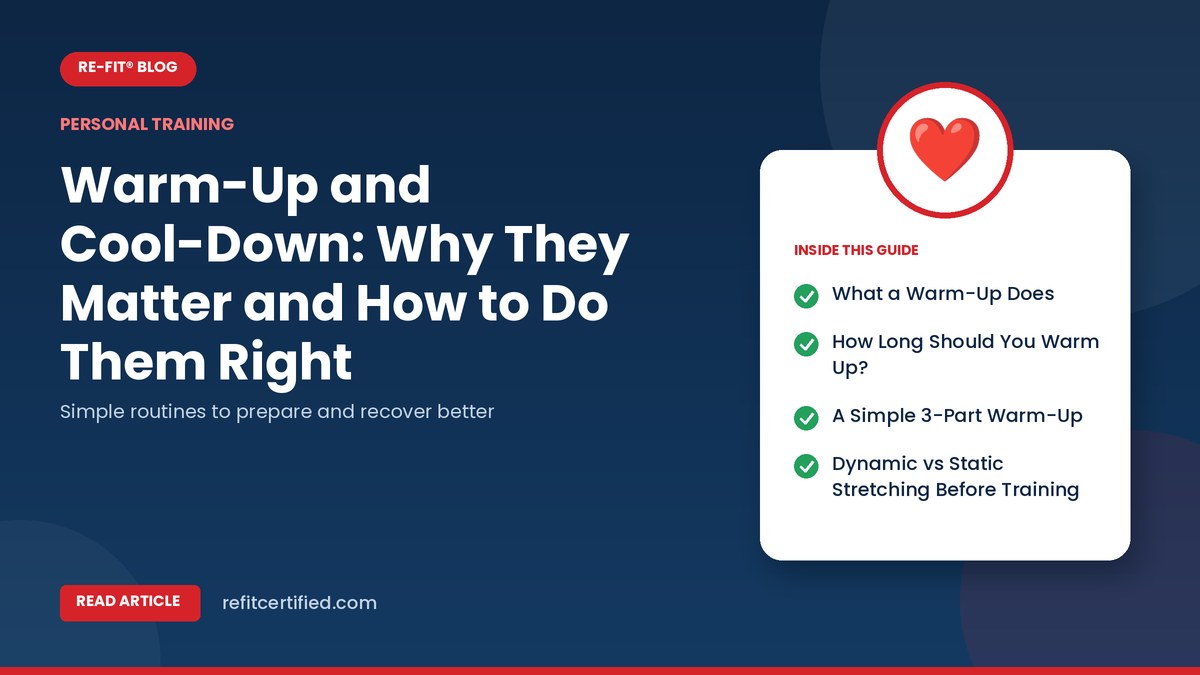
What a Warm-Up Does
A good warm-up prepares your body and mind for training:
- Raises your heart rate and breathing gradually
- Increases blood flow to working muscles
- Warms muscles and tissues so they move more freely
- Improves joint range of motion
- Practises the movements you are about to load
- Helps you focus on the session
How Long Should You Warm Up?
For most sessions, 8 to 12 minutes is enough. Older adults, people training early in the morning and athletes preparing for intense sport may need a little longer.
A Simple 3-Part Warm-Up
Part 1: Raise (3 to 5 minutes)
Light cardio such as brisk walking, easy cycling, skipping or marching on the spot. You should feel warm and breathe a little faster, but still be able to talk.
Part 2: Mobilise (3 to 4 minutes)
- Arm circles: 10 each direction
- Hip circles: 10 each direction
- Cat-cow: 8 reps
- World's greatest stretch: 4 per side
- Leg swings: 10 per leg
Part 3: Prepare (2 to 3 minutes)
Do lighter versions of your main exercises. If today is a squat day, do bodyweight squats, then one or two light sets with the bar before your working weight.
Dynamic vs Static Stretching Before Training
Before training, choose dynamic movements that take joints through their range in a controlled way. Long static holds (30 seconds or more) right before heavy strength or sprint work may slightly reduce power for some people. Save longer holds for after the session.
What a Cool-Down Does
- Brings heart rate and breathing back down gradually
- Helps you shift from "training mode" to "rest mode"
- Gives time for gentle stretching when muscles are warm
- Is a good moment to reflect on the session and plan the next one
A Simple 5 to 8 Minute Cool-Down
- Easy walking or cycling: 2 to 3 minutes
- Hamstring stretch: 30 seconds per leg
- Hip flexor stretch: 30 seconds per side
- Chest stretch at the wall: 30 seconds per side
- Child's pose with slow breathing: 60 seconds
Warm-Up Ideas for Different Sessions
- Upper body day: band pull-aparts, push-up to downward dog, light dumbbell presses
- Lower body day: glute bridges, walking lunges, bodyweight squats
- Running: brisk walk, high knees, butt kicks, short easy strides
- Team sports: jogging, side shuffles, skips, quick changes of direction
Tips for Trainers
Make the warm-up part of the session, not optional. Use it to check how your client feels today. Stiffness, low energy or pain you notice in the warm-up can tell you to adjust the main workout.
Frequently Asked Questions
Can I skip the warm-up if I am short on time?
Shorten it rather than skip it. Even 5 minutes of light cardio and a few practice sets is much better than nothing.
Does stretching prevent muscle soreness?
Stretching feels good, but it does not reliably prevent next-day soreness. Gradual progression in training does more.
Is foam rolling part of a warm-up?
It can be. A minute or two on tight areas may help you feel looser before dynamic movements.
Train Smarter With RE-FIT
Safe session structure is a key part of professional training. Explore RE-FIT certifications to learn how to plan complete, effective sessions.
Recommended Resources
Continue learning with relevant RE-FIT courses, programs, and publications.