Deadlines, targets, long commutes and constant notifications can make work stressful. Some stress is normal and can even keep us focused. But when it continues for long periods, it can affect sleep, mood, health and performance.
The good news is that small daily habits can make a real difference. Here are ten you can start today.
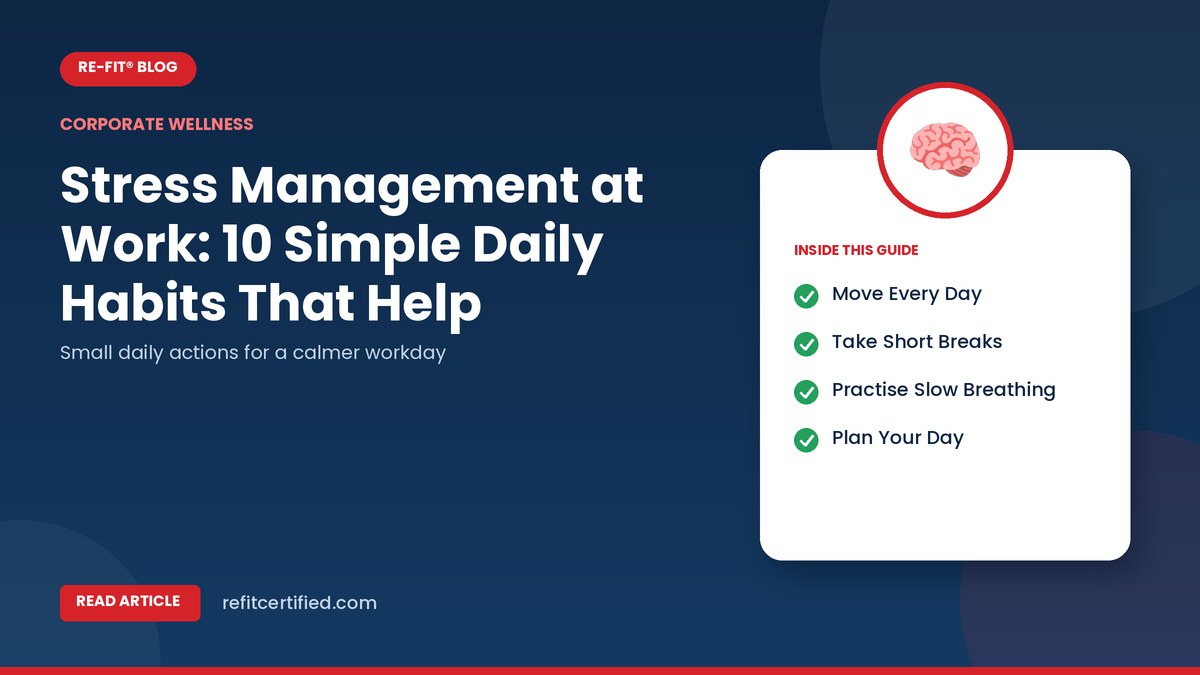
1. Move Every Day
Physical activity is one of the most effective stress relievers. A brisk 20 to 30 minute walk, a gym session or a short home workout can lift mood and help you feel calmer. Regular activity also improves sleep.
2. Take Short Breaks
Working for hours without a pause drains focus. Try a 5-minute break every hour: stand up, stretch, look away from the screen and breathe.
3. Practise Slow Breathing
When stress rises, breathing becomes fast and shallow. Try this: breathe in through the nose for 4 counts, hold for 2 and breathe out slowly for 6. Repeat for 1 to 2 minutes.
4. Plan Your Day
Write your top three priorities each morning. Finishing the important tasks first reduces the feeling of being overwhelmed.
5. Limit Constant Notifications
Check email and messages at set times instead of every few minutes. Turn off non-essential alerts during focused work.
6. Eat Regular, Balanced Meals
Skipping meals and depending on tea, coffee or sugary snacks can make energy and mood swing. Eat regular meals with protein, vegetables and whole grains, and drink enough water.
7. Protect Your Sleep
Most adults need about 7 to 9 hours of sleep. Keep a regular bedtime, avoid screens for 30 to 60 minutes before sleep and keep your bedroom dark and cool.
8. Set Healthy Boundaries
Where possible, define your working hours and stick to them. Learn to say "I can do this by Thursday" instead of agreeing to everything immediately.
9. Stay Connected
Talking with friends, family or trusted colleagues helps. Social support is a strong protector against stress.
10. Make Time for Things You Enjoy
Hobbies, sport, music, prayer or time in nature help your mind recover. Schedule them like any important meeting.
Signs You May Need More Support
Speak to a doctor or qualified mental health professional if you notice:
- Constant worry or low mood for weeks
- Ongoing sleep problems
- Physical symptoms like frequent headaches or stomach problems
- Losing interest in things you used to enjoy
Asking for help is a sign of strength, not weakness.
What Employers Can Do
- Encourage breaks and reasonable workloads
- Offer wellness activities and fitness sessions
- Train managers to notice signs of burnout
- Share information about professional support
Frequently Asked Questions
Which exercise is best for stress?
The one you enjoy and will do regularly. Walking, strength training, yoga, dance and sports can all help.
How quickly does exercise reduce stress?
Many people feel calmer after a single session, and regular activity brings longer-lasting benefits.
Can breathing exercises really help?
Slow breathing can help calm the body's stress response and is easy to do anywhere.
Bring Wellness to Your Workplace
RE-FIT Corporate Wellness helps organisations build healthier, more resilient teams. Learn about RE-FIT Corporate Wellness.
This article is for general information and is not a substitute for professional medical or mental health advice.
Recommended Resources
Continue learning with relevant RE-FIT courses, programs, and publications.