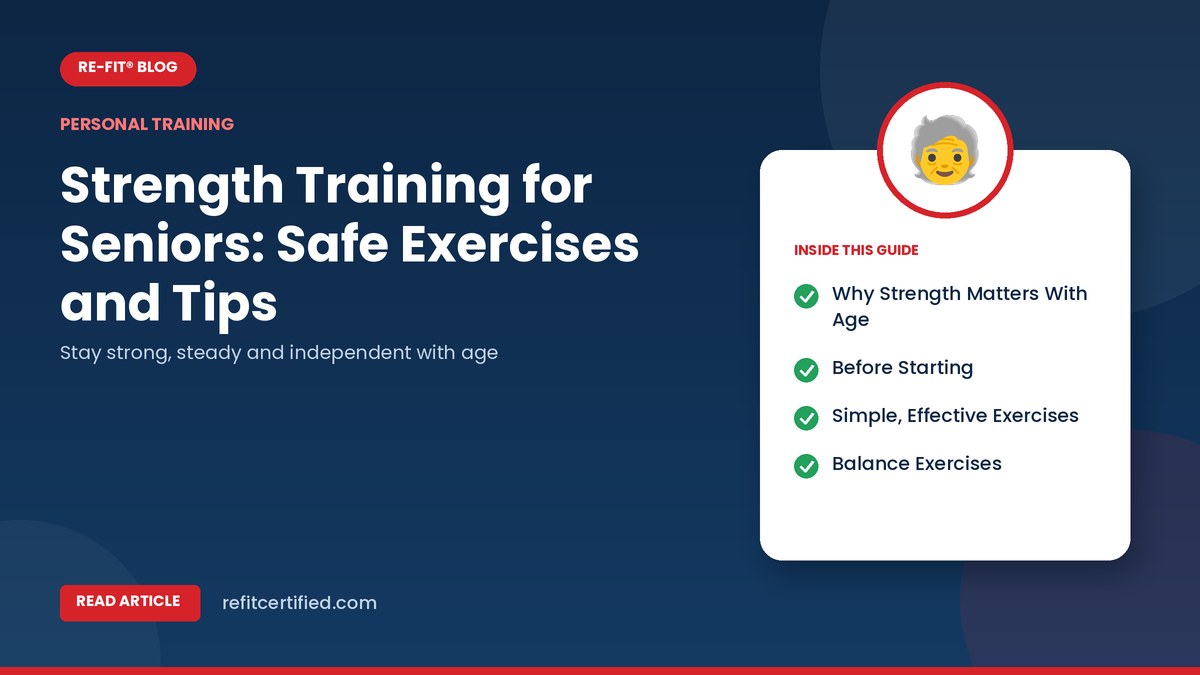
Strength training is not only for young athletes. For older adults, it may be one of the most valuable forms of exercise. It helps people stay independent, climb stairs with confidence, carry shopping and reduce the risk of falls.
Why Strength Matters With Age
- Muscle mass and strength naturally decline with age if not trained
- Stronger legs improve balance and reduce fall risk
- Resistance training supports bone health
- Regular exercise supports mood, sleep and confidence
Health organisations such as the WHO recommend that older adults include muscle-strengthening activities on two or more days per week, along with balance training.
Before Starting
Get clearance from a doctor, especially with heart conditions, high blood pressure, diabetes, joint replacements or recent surgery. Start light and progress slowly.
Simple, Effective Exercises
- Sit-to-stand: stand up from a chair without using hands, then sit down slowly.
- Wall push-up: hands on a wall, bend and straighten the arms.
- Step-ups: onto a low step, holding a rail for support.
- Seated or band row: pull a resistance band towards the body.
- Heel raises: holding a chair, rise onto the toes and lower slowly.
- Glute bridge: on a mat or bed if getting to the floor is difficult.
- Farmer's walk: carry light bags or dumbbells for a short distance.
Balance Exercises
- Standing on one leg while holding a chair
- Heel-to-toe walking along a line
- Standing up and sitting down slowly with eyes forward
Sample Weekly Plan
- 2 to 3 days: strength exercises, 1 to 2 sets of 8 to 12 reps
- Most days: 20 to 30 minutes of walking
- Daily: 5 minutes of balance practice
Safety Tips
- Warm up for 5 to 10 minutes
- Breathe normally; avoid holding the breath
- Move slowly and with control
- Stop if there is chest pain, dizziness or sharp joint pain
- Exercise near a wall or sturdy chair for support
Tips for Trainers
Older clients need patience, clear instructions and encouragement. Focus on functional goals like climbing stairs or getting up from the floor, and celebrate small improvements.
Common Myths About Seniors and Strength
- "Weights will hurt my joints." Properly guided strength training often makes everyday movement easier and more comfortable.
- "Walking is enough." Walking is excellent, but it does not build strength in the same way.
- "I'm too old to improve." Strength can improve with training at any age.
How to Progress Safely
Start with body weight and light bands. Once 12 controlled reps feel comfortable for two sets, increase difficulty slightly: a lower chair for sit-to-stand, a firmer band, or a light dumbbell. Progress every two to three weeks rather than every session.
Make It Social and Enjoyable
Group classes for older adults, exercising with a friend or partner, or joining a community walking group help people stay consistent. Enjoyment is one of the strongest predictors of long-term exercise.
Frequently Asked Questions
Is it too late to start at 70?
Studies show older adults can improve strength at any age with safe, regular training.
Are weights safe for seniors?
With medical clearance, proper technique and gradual progression, light to moderate weights are generally safe.
Learn to Train All Ages With RE-FIT
Explore RE-FIT personal trainer certification.
General information only. Always follow medical advice for individual health conditions.
Recommended Resources
Continue learning with relevant RE-FIT courses, programs, and publications.