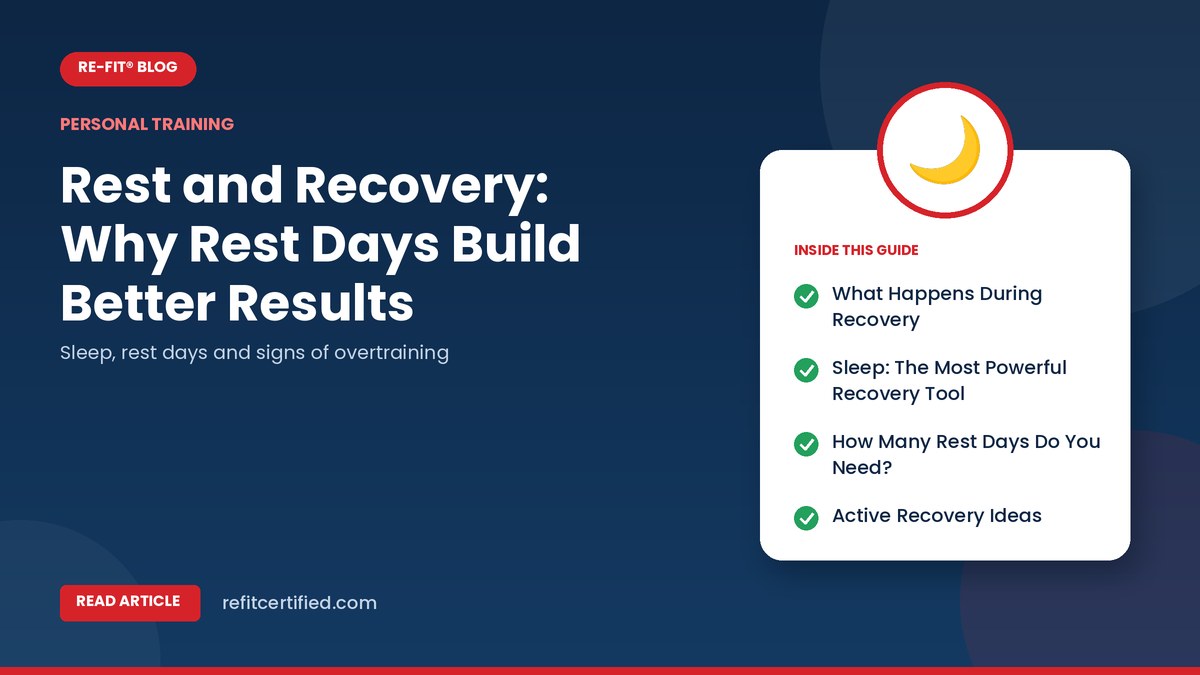
Training is the signal; recovery is when the body actually adapts. Muscles repair, energy stores refill and the nervous system recovers between sessions. Without enough recovery, progress slows down and injury risk can rise.
What Happens During Recovery
- Muscle fibres repair and gradually become stronger
- Energy stores (glycogen) are refilled
- Connective tissues like tendons adapt to load
- Hormones and the nervous system settle
Sleep: The Most Powerful Recovery Tool
Most adults need about 7 to 9 hours. Poor sleep can reduce strength, motivation and appetite control. Simple habits help:
- Keep regular sleep and wake times
- Limit screens for 30 to 60 minutes before bed
- Keep the room dark, quiet and cool
- Avoid heavy meals and caffeine late in the day
How Many Rest Days Do You Need?
It depends on training level and intensity. Many people do well with one or two rest or light days per week. Training the same muscle group hard every day usually leaves too little time to recover.
Active Recovery Ideas
- 20 to 40 minutes of easy walking or cycling
- Gentle mobility or yoga
- Light swimming
- Foam rolling and stretching
Signs of Overtraining or Under-Recovery
- Performance dropping for more than a week or two
- Constant fatigue and heavy legs
- Poor sleep or unusually high resting heart rate
- Frequent minor injuries or illness
- Loss of motivation or irritability
If several of these appear, reduce training volume for a week and focus on sleep and nutrition.
Nutrition for Recovery
- Enough total calories for your goal
- Protein spread through the day
- Carbohydrates to refill energy after hard sessions
- Plenty of water
Planning Recovery Into a Program
Trainers can plan a lighter "deload" week every 4 to 8 weeks for hard-training clients, alternate muscle groups, and adjust sessions based on how the client slept and feels.
Planning a Week With Recovery Built In
- Monday: full-body strength
- Tuesday: walking and mobility
- Wednesday: full-body strength
- Thursday: light cardio or a sport you enjoy
- Friday: full-body strength
- Saturday: long walk, cycling or yoga
- Sunday: complete rest
This kind of plan trains hard three days a week while giving enough time to recover.
Stress Is Also Load
Work deadlines, family responsibilities and poor sleep all affect recovery. On high-stress weeks, it is smart to reduce training volume slightly rather than push through every planned session.
Simple Daily Recovery Habits
- Walk for 10 minutes after meals
- Stretch for five minutes before bed
- Drink water through the day
- Spend some time outdoors in daylight
Frequently Asked Questions
Is muscle soreness a sign of a good workout?
Not necessarily. Soreness is common after new exercises, but progress can happen without it.
Can I train when I am sore?
Light training is usually fine. Avoid hard training of very sore muscles and listen to your body.
Learn Program Design With RE-FIT
Explore RE-FIT certifications to plan training and recovery like a professional.
Recommended Resources
Continue learning with relevant RE-FIT courses, programs, and publications.