Many working professionals spend seven or more hours a day at a desk. A poor setup can lead to stiff necks, sore shoulders and tired backs. A few simple adjustments, plus regular movement, can make work days much more comfortable.
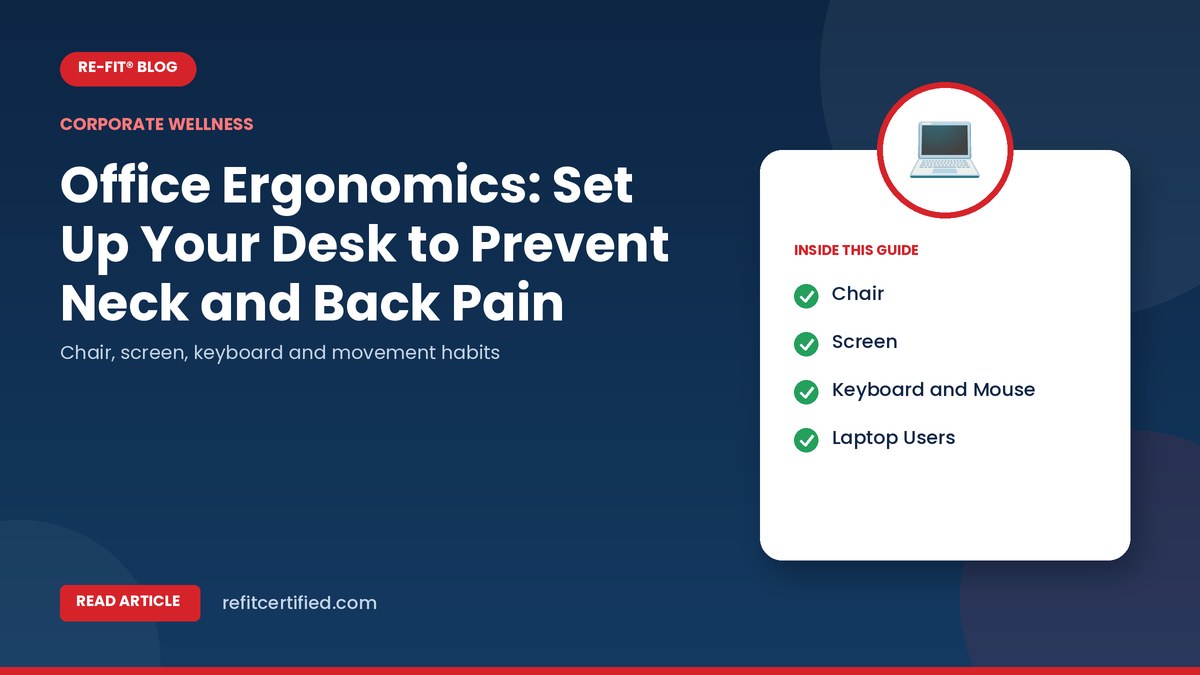
1. Chair
- Feet flat on the floor or on a footrest
- Knees roughly at hip level
- Back supported, with a small cushion for the lower back if needed
- Sit back in the chair rather than on the edge
2. Screen
- Top of the screen at or slightly below eye level
- About an arm's length away
- Directly in front of you, not to one side
- Reduce glare from windows and lights
3. Keyboard and Mouse
- Elbows relaxed by your sides, bent at about 90 degrees
- Wrists straight, not bent up or down
- Mouse close to the keyboard to avoid reaching
4. Laptop Users
Laptops force either the screen or the keyboard into a poor position. For long work, use a laptop stand with a separate keyboard and mouse. Even a pile of books can raise the screen.
5. Phone Habits
- Bring the phone up to eye level instead of bending the neck down
- Use headphones or speaker for long calls
6. Move Every 30 to 60 Minutes
No posture is perfect for hours. The best posture is the next posture. Simple movement breaks:
- Stand up and walk for 2 minutes
- Shoulder rolls and neck turns
- Seated twists and chest opener stretch
- A few bodyweight squats
7. Strengthen Outside Work
Regular strength training for the upper back, core and hips helps the body handle long sitting better.
Quick Desk Checklist
- Feet supported
- Back supported
- Screen at eye level
- Elbows at 90 degrees
- Wrists straight
- Break every hour
Work-From-Home Setup
Working from a sofa or bed is one of the biggest causes of neck and back discomfort. Use a table and a chair with back support, raise the laptop, and work near natural light. Set a timer to stand up regularly.
Simple 3-Minute Desk Stretch Routine
- Neck turns: 5 each side
- Shoulder rolls: 10 backwards
- Chest opener with hands behind the head: 30 seconds
- Seated twist: 20 seconds each side
- Stand and reach overhead: 5 slow breaths
Frequently Asked Questions
Are standing desks better?
They help by allowing position changes. Alternating between sitting and standing is better than doing either all day.
When should I see a doctor?
If pain is severe, constant, or comes with numbness or weakness, seek medical advice.
Bring Wellness to Your Workplace
RE-FIT Corporate Wellness offers posture workshops and fitness sessions for teams. Learn about Corporate Wellness.
Recommended Resources
Continue learning with relevant RE-FIT courses, programs, and publications.