Water is the most overlooked part of sports nutrition. Even small amounts of fluid loss can make training feel harder, reduce focus and increase tiredness, especially in hot and humid Indian weather.
This guide explains how to stay well hydrated before, during and after exercise.
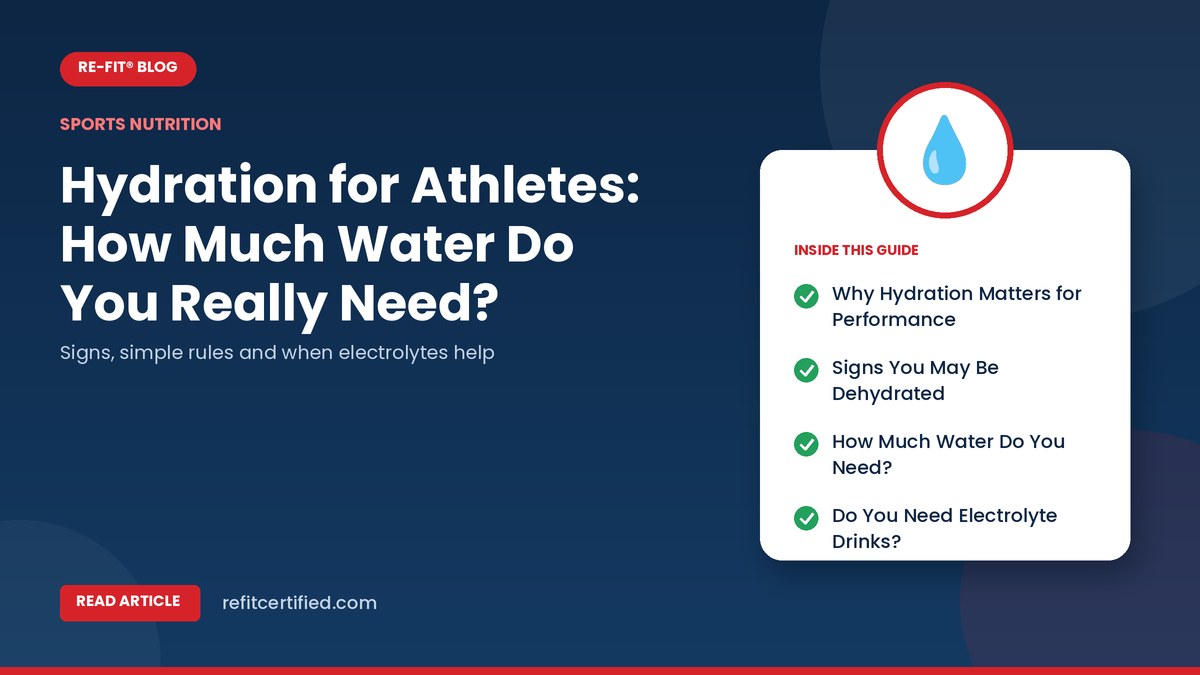
Why Hydration Matters for Performance
- Helps control body temperature through sweating
- Supports blood flow to muscles
- Helps maintain concentration and coordination
- Reduces the risk of heat-related illness
Signs You May Be Dehydrated
- Dark yellow urine or passing urine less often
- Thirst, dry mouth
- Headache or dizziness
- Unusual tiredness or poor performance
- Muscle cramps in some people
A simple daily check: pale yellow urine usually means you are well hydrated.
How Much Water Do You Need?
There is no single number for everyone. Needs depend on body size, climate, training intensity and how much you sweat. Instead of a fixed target, use a plan:
Before training
Start the session well hydrated. Drink regularly through the day and have a glass or two of water in the 2 to 3 hours before training.
During training
- Sessions under an hour: water is usually enough; take small sips every 15 to 20 minutes
- Longer or very sweaty sessions: consider fluids with electrolytes and some carbohydrate
After training
Drink to replace what you lost. A useful method: weigh yourself before and after a hard session. The weight you lose is mostly fluid. Drink gradually over the next few hours to replace it, ideally with a meal that contains some salt.
Do You Need Electrolyte Drinks?
When you sweat, you lose sodium and other minerals too. For most short gym sessions, water and normal meals are enough. Electrolytes are more useful when:
- Training lasts more than 60 to 90 minutes
- You train in strong heat or humidity
- You are a "salty sweater" (white marks on clothes after training)
- You play long matches or tournaments
Simple home options include nimbu pani with a pinch of salt and sugar, coconut water, or buttermilk with a little salt.
Can You Drink Too Much Water?
Yes. Drinking very large amounts of plain water during very long events, without replacing salt, can dangerously lower blood sodium. This is rare in normal gym training but matters for marathons and long tournaments. Drink to a plan and to thirst, not as much as possible.
Practical Hydration Tips
- Carry a water bottle everywhere
- Drink a glass of water with each meal
- Eat water-rich foods like watermelon, cucumber and oranges
- Increase fluids on hot days and during travel
- Coaches: schedule water breaks for young athletes
Frequently Asked Questions
Are tea and coffee dehydrating?
In normal amounts, they still contribute to your daily fluid intake for most people.
Is cold water better during exercise?
Cool water may be more pleasant in hot weather and can encourage you to drink more.
Do children need special hydration care?
Yes. Children may not notice thirst during play, so regular water breaks are important.
Learn Performance Nutrition With RE-FIT
Hydration planning is a core part of sports nutrition. Explore the RE-FIT Certified Sports Nutritionist (CSN) course.
General information only. People with heart or kidney conditions should follow medical advice on fluid intake.
Recommended Resources
Continue learning with relevant RE-FIT courses, programs, and publications.