
How to Start a Successful Career as a Certified Personal Trainer in India
The fitness industry in India is growing rapidly as more people become aware of the importance of exercise, healthy lifestyles, strength training, weight management, and preventive wellness. This growing awareness has created new career opportunities for skilled and professionally trained personal trainers.
Becoming a certified personal trainer can be a rewarding career choice for people who are passionate about fitness, enjoy helping others, and want to build a professional identity in the health and fitness industry.
However, success in personal training requires more than simply knowing how to exercise. A professional trainer must understand human anatomy, exercise techniques, client assessment, program planning, safety, communication, motivation, and ethical responsibilities.
What Does a Certified Personal Trainer Do?
A certified personal trainer helps individuals improve their fitness levels through structured, safe, and goal-oriented exercise programs.
A personal trainer may work with clients who want to:
-
Lose body fat
-
Build strength and muscle
-
Improve mobility and flexibility
-
Increase stamina and endurance
-
Develop healthier lifestyle habits
-
Prepare for sports or physical activities
-
Exercise safely under professional guidance
The trainer assesses the client’s current fitness level, understands their goals, creates an appropriate workout plan, teaches correct exercise techniques, and monitors progress.
Why Choose Personal Training as a Career?
Personal training offers multiple career paths and can provide flexibility, professional growth, and the opportunity to make a positive difference in people’s lives.
-
Growing Demand for Fitness Professionals
Gyms, fitness studios, wellness centres, residential communities, schools, corporate organisations, sports academies, and individual clients require trained fitness professionals.
As awareness of health and fitness increases, people are becoming more willing to seek expert guidance instead of following random exercise routines.
-
Flexible Career Options
A certified personal trainer can work in different professional environments, including:
-
Commercial gyms
-
Fitness clubs
-
Health clubs
-
Private studios
-
Sports academies
-
Corporate wellness programmes
-
Online fitness coaching
-
Home-based personal training
-
Independent fitness consulting
-
Opportunity to Build Your Own Brand
Many personal trainers begin by working in a gym and later develop their own client base, online coaching service, fitness studio, or professional fitness brand.
With the right certification, experience, communication skills, and consistent results, trainers can create long-term career opportunities.
Essential Skills Required for a Personal Trainer
A successful personal trainer needs a combination of technical knowledge, practical ability, and interpersonal skills.
Exercise Knowledge
Trainers must understand how different exercises affect the body and how to select exercises according to a client’s goals, fitness level, and limitations.
Understanding of Anatomy and Physiology
Basic knowledge of muscles, joints, movement patterns, posture, breathing, and body systems helps trainers plan safer and more effective exercise sessions.
Client Assessment
Before designing a programme, a trainer should understand the client’s physical condition, lifestyle, training history, goals, and exercise readiness.
Communication Skills
A trainer must explain exercises clearly, listen carefully, provide constructive feedback, and communicate professionally.
Motivation and Behaviour Support
Many clients struggle with consistency. A good trainer helps clients remain focused, realistic, and committed to their fitness goals.
Professional Ethics
Personal trainers should work within their professional scope, respect client privacy, maintain appropriate boundaries, and avoid making unsupported medical or nutritional claims.
Step-by-Step Guide to Becoming a Certified Personal Trainer
Step 1: Build Your Own Fitness Foundation
Before guiding others, develop a basic understanding of exercise and maintain a disciplined approach to your own health and fitness.
You do not need to have a bodybuilding physique, but you should understand exercise consistency, correct technique, and professional behaviour.
Step 2: Complete a Professional Certification
A structured personal trainer certification helps you study important subjects such as:
-
Human anatomy and physiology
-
Exercise science
-
Fitness assessment
-
Strength and conditioning principles
-
Cardiovascular training
-
Flexibility and mobility
-
Programme design
-
Client safety
-
Professional responsibilities
RE-FIT® offers a Certified Personal Trainer course designed for learners who want to develop professional knowledge and enter the fitness industry.
Step 3: Practise Exercise Technique
Certification knowledge must be supported by practical understanding. Learn how to demonstrate exercises, identify common mistakes, adjust movements, and provide clear instructions.
Step 4: Gain Experience
New trainers can gain experience through internships, gym employment, supervised sessions, assisting senior trainers, or working with beginner-level clients.
Early experience helps trainers improve confidence, communication, observation, and programme-planning skills.
Step 5: Choose Your Career Direction
Personal training includes several possible specialisations. Over time, you may focus on areas such as:
-
General fitness
-
Weight management
-
Strength training
-
Functional fitness
-
Senior fitness
-
Women’s fitness
-
Online coaching
-
Sports conditioning
-
Corporate wellness
Step 6: Build a Professional Profile
Create a simple and trustworthy professional identity that includes your certification, skills, experience, services, and contact information.
You may use:
-
A professional social media profile
-
A Google Business Profile
-
A simple website or landing page
-
Client testimonials
-
Educational fitness content
-
Professional photographs and videos
Step 7: Continue Learning
The fitness industry continues to evolve. Successful trainers regularly improve their knowledge, review exercise techniques, study client needs, and develop additional professional skills.
Continuing education can help trainers provide better services and remain competitive.
Where Can Certified Personal Trainers Work?
Certified personal trainers can explore employment, freelance work, and business opportunities.
Gym or Health Club
Working in a gym allows new trainers to meet clients, learn professional systems, and gain practical experience.
Independent Personal Training
Experienced trainers may provide one-to-one training at homes, parks, studios, or private facilities.
Online Fitness Coaching
Online coaching allows trainers to work with clients through video sessions, digital workout plans, progress tracking, and regular communication.
Corporate Wellness
Companies may engage fitness professionals for employee wellness sessions, movement programmes, fitness awareness, and workplace health initiatives.
Learn more about RE-FIT® Corporate Wellness programmes.
Sports Academies and Educational Institutions
Fitness trainers may also support sports academies, schools, colleges, and training institutions through structured physical fitness programmes.
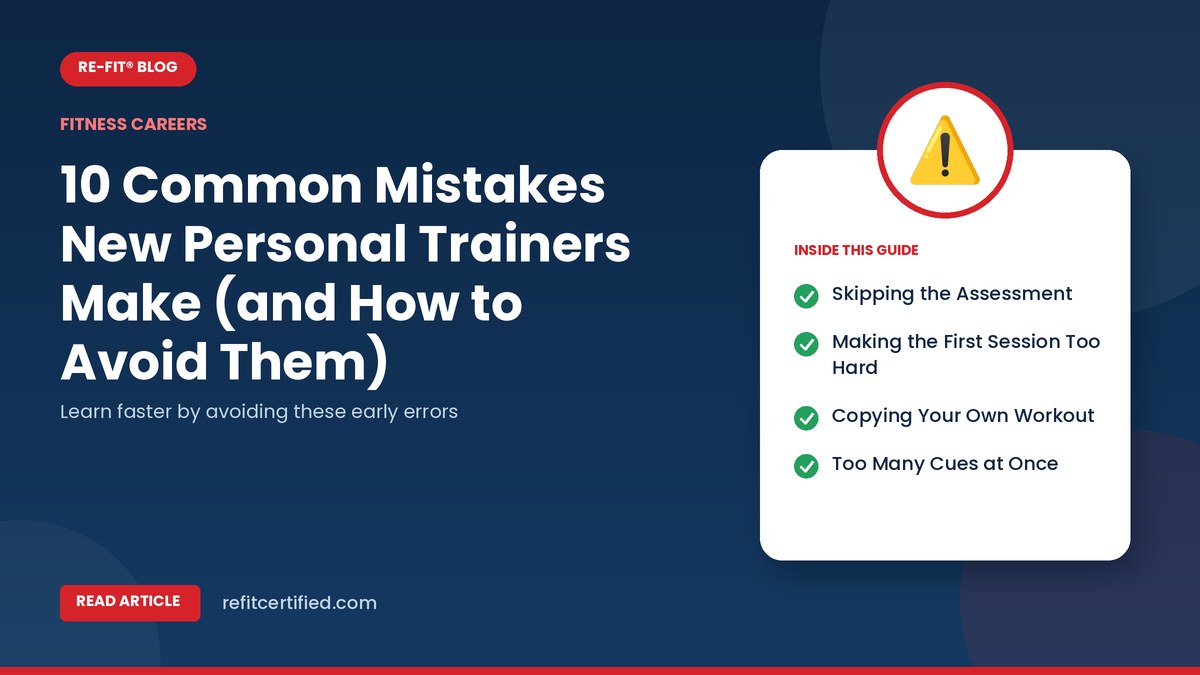
Common Mistakes New Personal Trainers Should Avoid
Copying the Same Programme for Every Client
Each client has different goals, abilities, limitations, and lifestyle factors. Training programmes should be personalised.
Focusing Only on Difficult Exercises
Advanced-looking exercises are not always better. Safe progression, correct technique, and suitability are more important.
Making Unrealistic Promises
Professional trainers should not promise instant weight loss, guaranteed transformations, or impossible results.
Ignoring Client Safety
Exercise intensity should match the client’s fitness level. Trainers must pay attention to warning signs, discomfort, poor technique, and excessive fatigue.
Giving Medical Advice
Personal trainers are not doctors unless separately qualified. Clients with medical concerns should be referred to an appropriate healthcare professional.
Stopping Education After Certification
Certification is the beginning of a professional journey, not the end. Trainers should continue learning and improving their skills.
How to Get Your First Personal Training Clients
Finding initial clients can take time, but consistent professional effort can build trust.
-
Start with your local gym or fitness community
-
Offer professional fitness assessments
-
Share educational content on social media
-
Request genuine client testimonials
-
Create beginner-friendly training packages
-
Build referral relationships
-
Maintain professional communication
-
Focus on client experience and measurable progress
Do not depend only on discounts. Clients are more likely to stay when they receive professional guidance, attention, safety, and consistent support.
Can You Become a Personal Trainer Through Online Learning?
Online education can provide flexibility for learners who cannot attend regular classroom programmes. A structured online course allows students to study at their own pace and review learning material according to their schedule.
RE-FIT® certification programmes are offered through an online, self-paced learning system. After course purchase, learners receive login credentials, access the study material, complete the online examination, and can download their certificate after successfully passing the assessment.
Before enrolling, learners should review the course structure, subjects, assessment method, support system, and certification process.
Frequently Asked Questions
Is personal training a good career in India?
Personal training can be a good career for individuals who are committed to learning, professional development, client service, and building practical experience.
Do I need a certification to become a personal trainer?
A professional certification helps demonstrate that you have studied important training principles, safety guidelines, and client-management concepts. Many employers and clients prefer certified trainers.
Can I work independently after completing a personal trainer course?
Yes. Trainers may work independently, but it is helpful to gain practical experience, understand client assessment, maintain professional records, and work within the scope of their qualification.
Can a personal trainer provide diet plans?
A trainer may provide general healthy lifestyle guidance within their education and professional scope. Medical nutrition therapy or specialised diet treatment should be handled by an appropriately qualified nutrition or healthcare professional.
How can I grow my career after becoming certified?
You can develop practical experience, improve communication skills, build a professional client base, pursue additional certifications, specialise in a fitness area, and create online or offline services.
Start Your Personal Training Career with Professional Knowledge
A successful personal training career is built through education, practical experience, ethical conduct, continuous learning, and genuine commitment to client wellbeing.
Professional certification can provide the foundation you need to understand exercise principles, programme design, client safety, and career opportunities.
Explore the RE-FIT® Certified Personal Trainer Course and begin developing the knowledge required for a professional career in the fitness industry.
Ready to begin? Visit the RE-FIT® Contact Page to request course information and enrolment guidance.
Recommended Resources
Continue learning with relevant RE-FIT courses, programs, and publications.