Passing your personal trainer certification is a big step. But many new trainers then face a harder question: where will my first clients come from? Gyms do not always hand you a full diary, and people rarely hire a trainer they have never heard of.
The good news is that your first ten clients do not need a big marketing budget. They need trust, visibility and a clear offer. This guide shows you how to build all three, step by step.
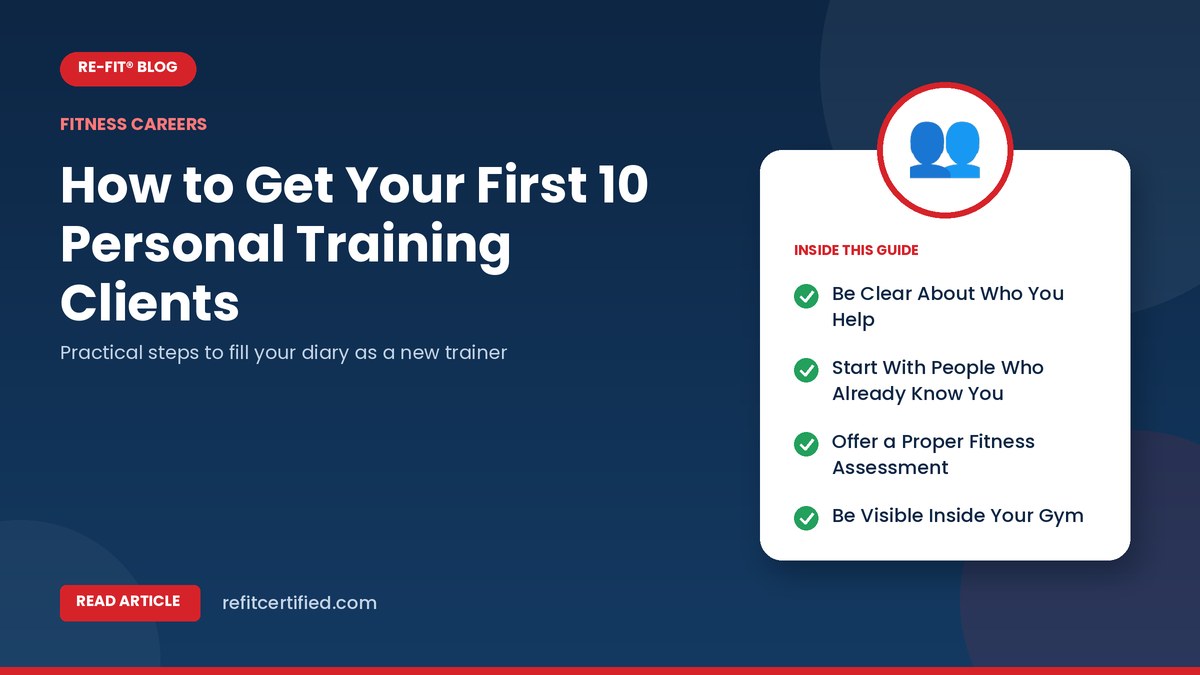
1. Be Clear About Who You Help
"I train everyone" sounds flexible, but it makes you easy to forget. Pick one or two groups you understand well, for example:
- Working professionals who have only 45 minutes a day
- Women starting strength training for the first time
- People over 40 who want to stay mobile and pain-free
- Young athletes who want to improve speed and strength
When you speak to one group, your posts, your conversations and your programs become sharper. People think, "This trainer understands me."
2. Start With People Who Already Know You
Your first clients often come from friends, relatives, neighbours and old colleagues. Tell them clearly that you are now a certified trainer and what kind of results you help with. Offer a short free assessment, not free months of training. A 30-minute assessment shows your skill and gives the person a reason to continue.
3. Offer a Proper Fitness Assessment
An assessment is your best sales tool because it is useful for the client. Include:
- Health history and any medical clearance needed
- Goals and lifestyle (sleep, work hours, food habits)
- Simple posture and movement checks such as a bodyweight squat
- Basic measurements the client is comfortable with
End the session with a short written plan: what you found, what you recommend and how many sessions per week. People buy a plan more easily than "some training."
4. Be Visible Inside Your Gym
If you work in a gym, the members are already interested in fitness. Help without selling: correct a dangerous lift politely, show a better warm-up, or answer a question. Keep your area clean, arrive early and look approachable. Members notice the trainer who cares, and they ask that trainer for help.
5. Share Useful Content Online
You do not need to post every day. Two or three good posts a week are enough. Ideas that work well:
- A 30-second video of one exercise with the common mistake and the fix
- A simple home workout for busy people
- A myth you hear often, explained in plain language
- Client progress stories (always with written permission)
Put your city or "online coaching" in your profile so people know how to work with you.
6. Make Your Pricing Simple
Confusing price lists slow people down. Offer two or three clear options, such as a single session, a monthly package of 12 sessions and a small-group option. Packages help clients commit and help you plan your income. Avoid deep discounts; instead, add value, for example a free progress check every four weeks.
7. Ask for Referrals the Right Way
Your happiest clients are your best marketing. After a client reaches a small win, such as their first full push-up or lower back pain getting better, ask: "Do you know one person who would like the same result?" You can offer the client a free session for every friend who joins.
8. Partner With Local Businesses
Physiotherapists, dieticians, sports shops, offices and housing societies all meet people who need a trainer. Offer a free talk on posture at work or a weekend group workout in a society park. One talk can bring several enquiries.
9. Follow Up Every Enquiry
Many trainers lose clients simply because they forget to reply. Keep a simple list of everyone who asks about training: name, phone number, goal and the date you spoke. Follow up after two days and again after a week. A short, friendly message is enough.
10. Keep Learning and Show It
Clients trust trainers who keep improving. Add specialisations over time, such as sports nutrition or strength and conditioning, and display your certificates. A verifiable certification also reassures clients that you have studied safe, structured training.
Quick Checklist for Your First Month
- Choose your main client group
- Create a simple assessment form
- Tell 50 people you know that you are now taking clients
- Post three helpful videos per week
- Set two or three clear price packages
- Track every enquiry and follow up
Frequently Asked Questions
How long does it take to get the first 10 clients?
It depends on your network, location and effort, but trainers who follow up consistently and offer assessments often build a small client base within a few months.
Should I train people for free at the start?
A free assessment or one trial session is fine. Long free training usually attracts people who are not committed. Charge a fair price and deliver great service.
Do I need a certification to get clients?
Most gyms and serious clients prefer a certified trainer. A recognised, verifiable certification shows you understand anatomy, program design and client safety.
Start Your Trainer Journey With RE-FIT
RE-FIT Sports & Fitness Academy offers practical certifications for personal trainers, sports nutritionists and health club managers. Explore RE-FIT certifications and build the skills clients look for.
Recommended Resources
Continue learning with relevant RE-FIT courses, programs, and publications.