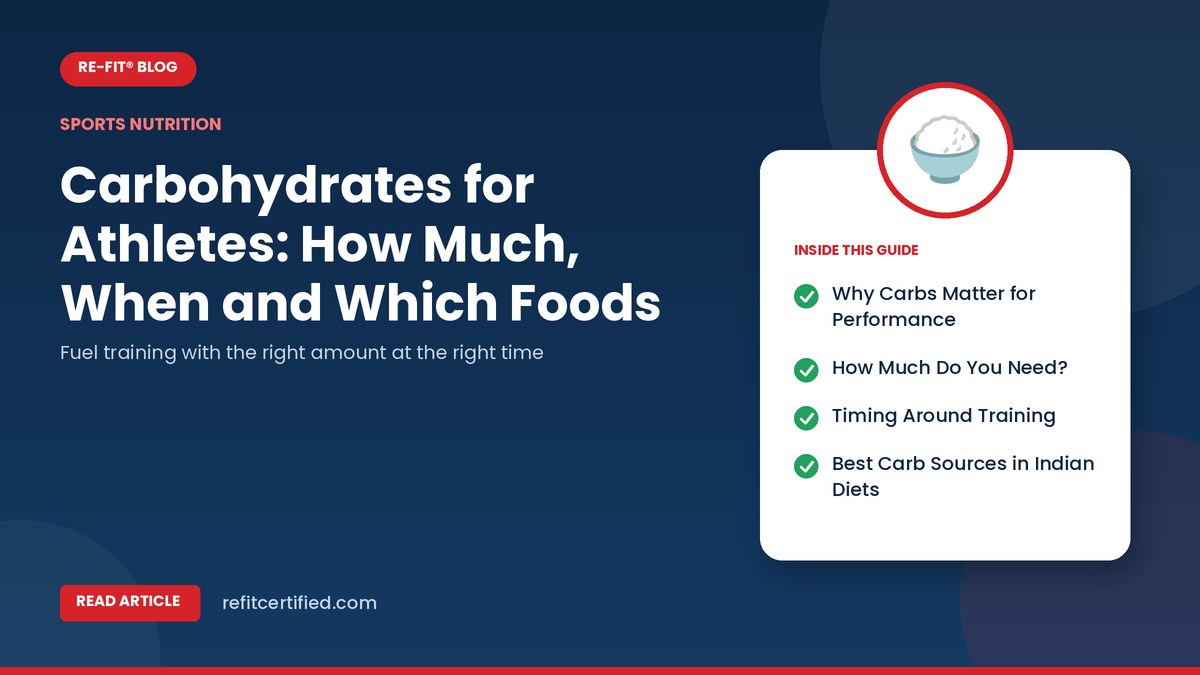
Carbohydrates often get a bad name in diet culture, but for active people and athletes they are an important fuel. They power high-intensity training, support recovery and help the brain stay sharp during competition.
Why Carbs Matter for Performance
- Muscles store carbohydrate as glycogen, a key fuel for intense exercise
- Low glycogen can lead to early fatigue and poor performance
- Carbs after training help refill energy stores for the next session
How Much Do You Need?
Needs depend on how long and how hard you train. Sports nutrition guidelines commonly describe ranges such as:
- Light activity or skill training: lower intake
- Moderate daily training (about an hour): moderate intake
- Endurance training of several hours: high intake
A qualified sports nutrition professional can turn these ranges into grams per day based on body weight, sport and goals.
Timing Around Training
Before
A meal with carbs 2 to 3 hours before, or a small carb snack 30 to 60 minutes before, such as a banana or a few dates.
During
For sessions longer than about 60 to 90 minutes, small amounts of carbohydrate (sports drinks, bananas) may help maintain energy.
After
Combine carbs with protein to support recovery, especially if training again within a day.
Best Carb Sources in Indian Diets
- Rice, roti, millets (bajra, jowar, ragi)
- Oats, poha, upma, dalia
- Potatoes and sweet potatoes
- Fruits: banana, mango, apple, dates
- Pulses and legumes, which also provide protein and fibre
Simple vs Complex Carbs
Whole grains and fibre-rich foods give steady energy and nutrients for daily meals. Faster-digesting carbs, like fruit, white rice or sports drinks, can be useful just before or during long sessions.
Common Mistakes
- Cutting carbs too low while training hard
- Eating a heavy, high-fibre meal just before training
- Not refuelling after long sessions
Carbs and Recovery Between Sessions
Athletes who train twice a day or play tournaments on back-to-back days need to refill energy stores quickly. Eating carbohydrates with some protein soon after the first session helps them be ready for the next one.
Sample Day for a Training Athlete
- Breakfast: poha with peanuts, milk and a banana
- Lunch: rice, dal, sabzi and curd
- Pre-training snack: dates or a fruit
- Post-training: paneer or egg roll with roti
- Dinner: millet roti, rajma, vegetables and salad
Adjust to the Training Day
Eat more carbohydrates on heavy training or match days and a little less on rest days. This simple approach, sometimes called "fuelling for the work required", helps athletes perform well without overeating.
Frequently Asked Questions
Do carbs make you fat?
Fat gain depends on total calorie balance over time, not carbs alone.
Should strength athletes eat carbs?
Yes. Carbs support hard training sessions, though needs may be lower than for endurance athletes.
Learn Sports Nutrition With RE-FIT
Explore the RE-FIT Certified Sports Nutritionist (CSN) course.
General information only. People with diabetes or other conditions should follow medical advice.
Recommended Resources
Continue learning with relevant RE-FIT courses, programs, and publications.